Medication Adherence for Diabetes in India
India is the diabetes capital of the world with 77M+ patients. Learn how Indian families can use WhatsApp reminders to improve medication adherence for diabetes and hypertension.
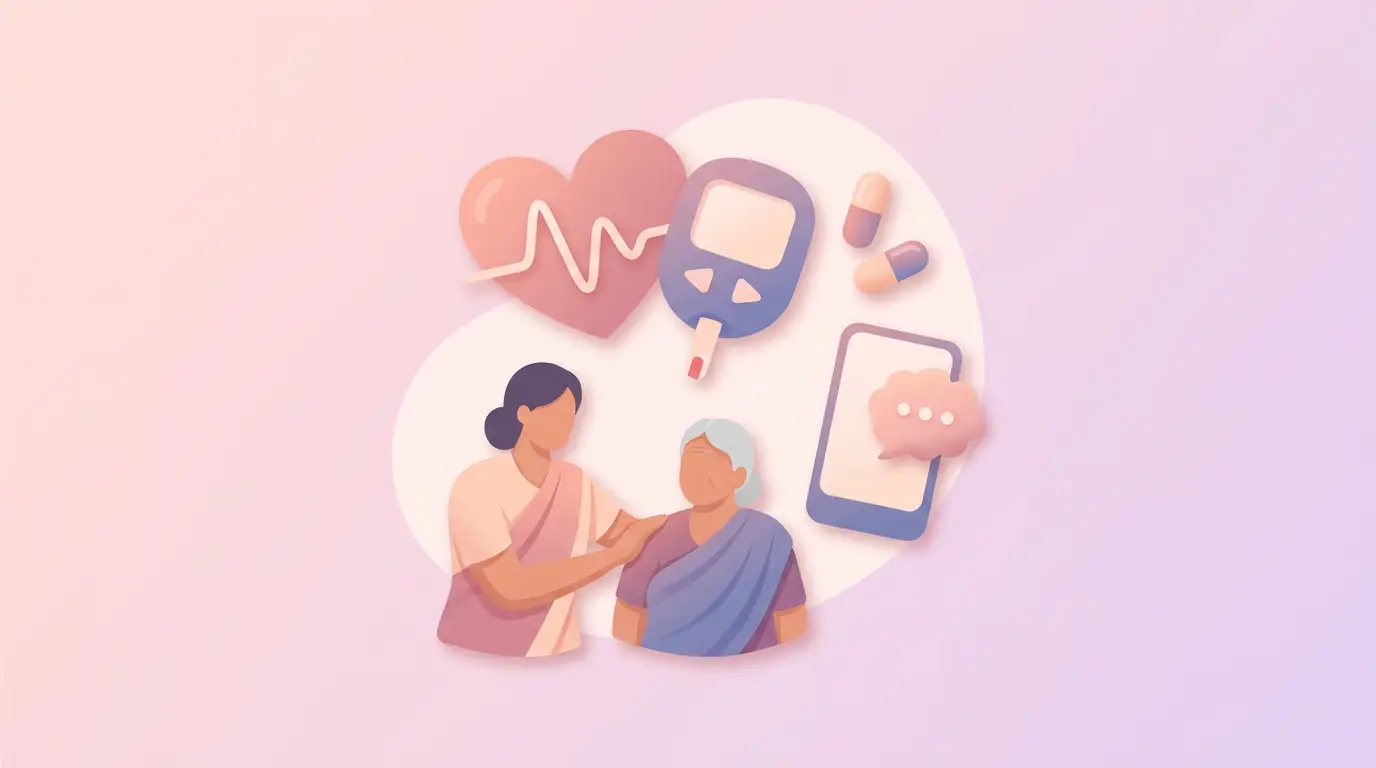
India bears a disproportionate burden of chronic disease. The numbers are alarming:
- 77 million Indians live with diabetes — the second highest in the world after China
- 1 in 4 Indian adults has hypertension (high blood pressure)
- By 2030, India is projected to have 100+ million diabetics
- Cardiovascular disease kills more Indians than any other cause
The most tragic part? Most of these conditions are manageable with consistent medication. The problem isn't access to drugs — India has some of the most affordable generic medications in the world. The problem is adherence.
Why Indian Patients Stop Taking Medication
"Mujhe kuch nahi hota" (Nothing happens to me)
This is the most dangerous phrase in Indian healthcare. Hypertension is called the "silent killer" because it has no symptoms until it causes a stroke or heart attack. When patients feel fine, they assume the medicine isn't needed. Educating patients about why consistent medication matters — even when they feel healthy — is critical.
Complicated Regimens
A typical Indian diabetic-hypertensive patient might be prescribed:
- Metformin 500mg — twice daily with meals
- Glimepiride 1mg — once daily before breakfast
- Telmisartan 40mg — once daily morning
- Atorvastatin 10mg — once daily at bedtime
- Aspirin 75mg — once daily after lunch
That's 5 different medications at 4 different times. Without a system, confusion and missed doses are inevitable.
Ayurvedic/Home Remedy Substitution
Many Indian patients (especially in rural areas) replace prescribed medication with ayurvedic alternatives or home remedies like karela juice (bitter gourd), methi (fenugreek), or dalchini (cinnamon). While these may have some benefits, they are not substitutes for prescribed diabetes or BP medication.
Cost Concerns
Despite India's affordable generics, patients on multiple medications may spend ₹1,000–₹3,000/month on medicines. Some patients "stretch" their medication by taking it every other day instead of daily — a dangerous practice that reduces effectiveness.
The Family's Role in Indian Healthcare
In Indian culture, healthcare has traditionally been a family affair. The joint family system meant someone was always around to remind Dadi or Nana to take their medicine. But that's changing rapidly:
- Nuclear families: Urban migration means elderly parents increasingly live alone or with a spouse
- Working couples: Both spouses working means no one is home during the day to monitor medication
- NRI children: Millions of adult children live abroad, unable to physically help
Technology needs to fill this gap — but it must be technology that elderly Indian parents can actually use.
Why Pillo Reminder Is Built for India
Pillo Reminder was designed with Indian families in mind:
- WhatsApp-native: Uses the app 500M+ Indians already have and love
- Meal-time aligned: Reminders at nashta (breakfast), dopahar ka khana (lunch), raat ka khana (dinner), and sone se pehle (bedtime) — exactly how Indian doctors prescribe
- Multilingual: Support for Hindi and regional languages
- NRI-friendly: Set up from anywhere in the world; reminders delivered in IST
- Affordable: Free plan available; paid plans start at just ₹99/month
- Zero tech skill required: Patients just read WhatsApp messages — no app to download, no account to create
A Real-World Scenario
Rahul (32, Bangalore) sets up Pillo Reminder for his parents in Lucknow.
His mother (58) is diabetic and takes Metformin and Glimepiride. She gets WhatsApp reminders at 8:00 AM and 8:30 PM.
His father (62) has hypertension and takes Telmisartan and Atorvastatin. He gets reminders at 7:30 AM and 10:00 PM.
Rahul set everything up in 5 minutes from his office. His parents just read the messages and take their pills. No more anxious phone calls asking "Papa, dawai li kya?"
What Indian Doctors Are Saying
Leading Indian physicians increasingly recommend reminder-based interventions:
- The Indian Council of Medical Research (ICMR) guidelines emphasize patient education and adherence support
- Studies in the Indian Journal of Endocrinology and Metabolism show that regular reminders improve HbA1c levels by 0.8–1.5% in diabetic patients
- The Cardiological Society of India notes that consistent BP medication can reduce stroke risk by up to 40%
Frequently Asked Questions
What is the best medicine reminder for Indian parents?
For Indian parents, a WhatsApp-based reminder like Pillo Reminder is ideal. It uses an app they already know, doesn't require any downloads, supports Hindi and other languages, and can be set up remotely by children living in other cities or abroad.
How can I remind my parents in India to take their diabetes medicine?
Sign up for Pillo Reminder, add your parents' WhatsApp numbers and their meal times (in IST), then add their diabetes medications. Pillo will send them personalized WhatsApp reminders at each meal time. You can set this up from anywhere — Delhi, Dubai, or Dallas.
Why do Indian patients stop taking BP medication?
The top reasons are: feeling "fine" (hypertension has no symptoms), cost concerns leading to dose skipping, switching to ayurvedic alternatives, and complex multi-drug regimens causing confusion. Automated reminders address the forgetfulness factor, which accounts for 40% of non-adherence.
Is Pillo Reminder available in Hindi?
Yes! Pillo Reminder supports multilingual messaging. Patients can receive WhatsApp reminders in Hindi and other Indian languages, making it accessible for elderly parents who aren't comfortable with English.
How much does Pillo Reminder cost in India?
Pillo Reminder offers a free plan (1 patient, unlimited medications). The Starter plan is ₹99/month and the Family plan (up to 5 patients) is ₹199/month. That's less than what most families spend on a single auto-rickshaw ride.
Stop Forgetting. Start Pillo.
Set up free WhatsApp medication reminders in under 2 minutes.
Get Started Free →