TextMyPill vs SMS vs Medicine Apps for India
Confused between SMS reminders, medicine apps, and WhatsApp reminders like TextMyPill? Here
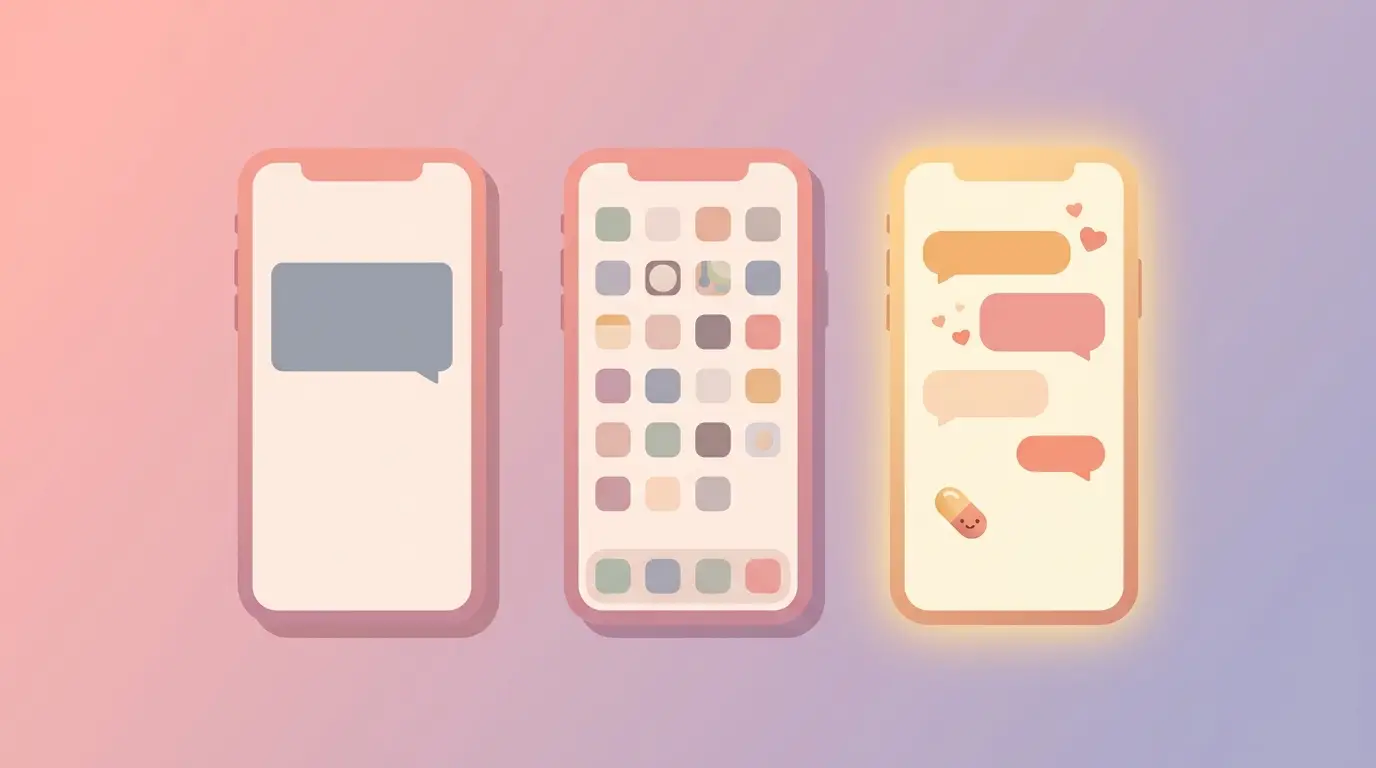
There are dozens of options. SMS reminders. Medicine apps. WhatsApp bots. Alarm clocks. Calendar alerts. Each one promises to solve the problem. Most of them don't.
This post breaks down exactly how each approach works, where it fails, and which one is actually worth using — especially if you're managing medicines for elderly parents in India.

The Problem With Medicine Reminders in India
Before comparing the solutions, let's be honest about the problem.
India has over 77 million diabetics, 220 million hypertension patients, and millions more on daily thyroid, heart, and post-surgery medication. That's a massive population that needs to take medicine every single day — for life.
And yet, according to the World Health Organization, only about 50% of patients actually follow their prescribed medication schedule consistently.
The reason isn't laziness. It's friction.
The reminder tool is either too complicated to set up, too easy to ignore, or requires something the patient doesn't want to learn. That's the gap TextMyPill was built to fill.
Now let's compare each approach honestly.
Option 1 — SMS Medicine Reminders
How It Works
A service sends you a plain text SMS at a set time reminding you to take your medicine. No internet needed. Works on any phone.
Where It Works Well
- Basic feature phones with no internet
- Rural areas with poor data connectivity
- Very elderly patients who don't use smartphones at all
Where It Fails
For most Indian families today, SMS has serious limitations:
- Easy to ignore. SMS notifications have no profile photo, no name, no personality. They look exactly like OTP messages and bank alerts. People swipe them away without reading.
- No two-way interaction. You can't reply "Done" to an SMS and have a system log your adherence. It's one-way communication.
- No prescription reading. You have to manually type every medicine name, dose, and timing yourself.
- No caregiver alerts. If your parent misses a dose, nobody gets notified.
- No adherence tracking. There's no dashboard showing whether medicines were actually taken.
Bottom line on SMS: It was a reasonable solution in 2015. In 2026, when nearly every Indian with a smartphone uses WhatsApp daily, SMS reminders feel outdated and get ignored.
Option 2 — Medicine Reminder Apps (Medisafe, MyTherapy, Dosecast, etc.)
How It Works
You download a dedicated app, create an account, manually enter each medicine name, dose, and timing, and the app sends push notifications at the scheduled time.
Where It Works Well
- Younger patients (25–40) who are comfortable with apps
- People managing complex multi-medicine schedules
- Patients who want detailed health tracking and graphs
Where It Fails for Indian Families
This is where it gets important — especially if you're setting this up for elderly parents.
1. The download barrier is real
Ask your 65-year-old father to download a new app, create an account, give permissions, and set up his medicine schedule. How many steps before he gives up? Most elderly patients abandon app-based solutions within the first week.
2. Push notifications get ignored or turned off
Smartphones show dozens of notifications daily. App reminders compete with news, calls, YouTube, and family WhatsApp groups. Many elderly users accidentally turn off notifications and never figure out how to turn them back on.
3. Manual setup is tedious
Typing "Metoprolol Succinate 25mg — twice daily after meals" on a small phone screen is not a small ask. If a patient has 4–5 medicines (common for elderly patients with multiple conditions), the setup alone takes 20–30 minutes and one wrong entry means wrong reminders.
4. The patient needs to actively use the app
If your parent forgets to open the app, the streak breaks. Many apps require the patient to mark doses inside the app itself — another step most elderly users skip.
5. You can't set it up for them remotely
If you're in Pune and your parents are in Nagpur, you can't set up their Medisafe account for them without physically being there or doing a complicated video call.
Bottom line on apps: Excellent for tech-savvy users managing their own health. Very poor fit for elderly patients in India where the caregiver and the patient are different people.
Option 3 — WhatsApp Medicine Reminders (TextMyPill)
How It Works
TextMyPill's AI assistant Pillo sends medicine reminders directly inside WhatsApp — the app your family already uses every single day. No new app to download. No new account for the patient to create. Just a friendly message arriving at the right time.
Here's the full flow:
- You (the caregiver or patient) sign up at textmypill.com
- Upload a photo of the prescription — printed, handwritten, or a pill bottle label
- Pillo's AI reads the prescription and automatically creates the reminder schedule
- You review and confirm the schedule with one tap
- Pillo sends reminders directly to the patient's WhatsApp number at the right times
- Patient replies "DONE" to confirm the dose
- If a dose is missed, Pillo follows up automatically — and alerts you as the caregiver
Why WhatsApp Works Where Others Fail
No learning curve for the patient.
Your parents don't need to download anything, create an account, or learn any new interface. They just receive a WhatsApp message — exactly like a message from you or a family member. The interaction is as simple as replying to a chat.
WhatsApp has a 98% open rate.
Compare that to SMS (which competes with spam) or push notifications (which get ignored). A WhatsApp message from a known contact gets read almost every single time. It's the one platform where Indians of all ages are genuinely active.
You can set it up remotely.
Living in Bangalore while your parents are in Jaipur? You do the setup on your phone. Your parents receive reminders on theirs. No technical knowledge required from the patient's side whatsoever.
AI prescription reading removes the biggest friction point.
No manual typing. No errors from misreading medicine names. Just snap a photo and Pillo does the rest. This single feature removes the most common reason people abandon other reminder tools before they even start.
Two-way conversation, not one-way alert.
When your parent replies "DONE" to Pillo, the system logs that dose as taken. This builds an adherence record automatically — without any extra effort from the patient.
Caregiver alerts for missed doses.
If your parent doesn't respond to a reminder within a set time, you get notified on your own WhatsApp. You stay informed without having to call and ask every single day.
Works in English, Hindi, and Marathi.
Pillo speaks to your family in the language they're most comfortable with. A reminder in Marathi feels more personal and gets better responses than a clinical English notification.
Bottom line on WhatsApp reminders: Removes every barrier that makes SMS and apps fail for elderly patients. Works on the platform already in their hands. Setup done by the caregiver, not the patient.
Side-by-Side Comparison
| Feature | SMS Reminder | Medicine App | TextMyPill (WhatsApp) |
|---|---|---|---|
| New app download needed | ❌ No | ✅ Yes | ❌ No |
| Works on existing platform | ✅ Yes | ❌ No | ✅ Yes |
| AI prescription reading | ❌ No | ❌ No | ✅ Yes |
| Two-way dose confirmation | ❌ No | ✅ Yes (in-app) | ✅ Yes (WhatsApp reply) |
| Caregiver remote setup | ❌ No | ❌ No | ✅ Yes |
| Missed dose caregiver alert | ❌ No | Some apps | ✅ Yes |
| Hindi / Marathi support | ❌ No | Rarely | ✅ Yes |
| Suitable for elderly patients | Partly | ❌ No | ✅ Yes |
| Adherence tracking | ❌ No | ✅ Yes | ✅ Yes |
| Works across India | ✅ Yes | ✅ Yes | ✅ Yes |
Which One Should You Choose?
Choose SMS if:
Your parent uses a basic feature phone with no internet and no WhatsApp. This is becoming increasingly rare but still applies in some rural contexts.
Choose a medicine app if:
You yourself are managing your own medication, you're comfortable with technology, and you want detailed health graphs and tracking built into a dedicated app.
Choose TextMyPill if:
- You're setting this up for elderly parents who aren't tech-savvy
- You live in a different city or country from the person who needs reminders
- You want zero friction for the patient — no downloads, no new passwords
- You want reminders in Hindi or Marathi
- You want to be notified when a dose is missed
- You want setup to take 2 minutes, not 2 hours
The Honest Truth About Medicine Adherence
The best medicine reminder is the one that actually gets used.
A sophisticated app that gets abandoned on day 3 is worse than a simple WhatsApp message that arrives reliably every morning. The goal isn't the most feature-rich tool. The goal is the one that fits into the patient's existing daily routine with the least possible resistance.
For most elderly Indians in 2026, that platform is WhatsApp. It's already on their phone. It's already something they check multiple times a day. It's already where their family talks to them.
TextMyPill puts medicine reminders exactly there — inside the most-used app globally, in the language that feels like home.
Try TextMyPill Free for 7 Days
No app download. No credit card. No complicated setup.
Just snap a prescription, confirm the schedule, and let Pillo handle the rest.
👉 Start your free trial at textmypill.com
Set up reminders for yourself, your parents, or anyone in your family who takes daily medicine — diabetes, blood pressure, thyroid, heart conditions, post-surgery recovery, or daily supplements.
TextMyPill is an automated organisational tool, not a medical professional. Always verify medication details with your doctor or pharmacist.
Frequently Asked Questions
Is TextMyPill the same as an SMS reminder?
No. TextMyPill sends reminders through WhatsApp, not SMS. WhatsApp messages have a 98% open rate, support two-way replies, and feel like a personal message — not a spam alert. The experience is completely different.
Does the patient need to download anything?
No. The patient only needs WhatsApp, which they almost certainly already have. Only the caregiver (the person setting up the reminders) needs a TextMyPill account.
Can I set this up for my parents if I live abroad?
Yes. This is one of TextMyPill's core use cases. NRI families across the UK, US, Canada, and the Middle East use TextMyPill to manage their parents' medicine schedules remotely from a single dashboard.
What if my parent forgets to reply DONE?
Pillo sends a follow-up reminder automatically. If the dose is still not confirmed after a set time, you as the caregiver get an alert on your WhatsApp so you can follow up personally.
Does it work for multiple medicines?
Yes. Pillo handles multiple medicines with different timings — morning, afternoon, night, before meals, after meals. The AI prescription reader sets all of this up automatically from a single prescription photo.
Published by the TextMyPill Team · June 2026
Tags: medicine reminder India, WhatsApp medicine reminder, medicine app for elderly parents, TextMyPill vs SMS, medication adherence India, Pillo reminder
Stop Forgetting. Start Pillo.
Set up free WhatsApp medication reminders in under 2 minutes.
Get Started Free →